Transforming R&D/ Drug Discovery with AI solutions for a Global Biopharmaceutical Leader. Powered by mcube™
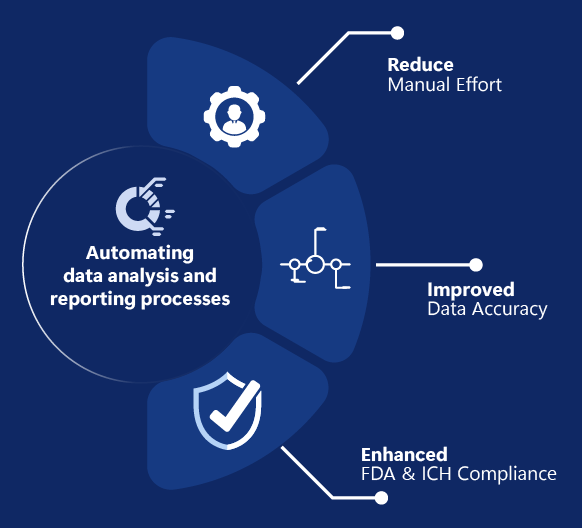
Cost saving
Enhanced efficiency
Improved data accuracy
Comprehensive analysis
Expected annual savings
$1.3
million for PK Assay Analysis
$0.8
million PK Assay Analysis with multiplex
$0.5
million Genotyping & Gene Expression Analysis
Overview
To accelerate its mission of delivering life-saving treatments faster, a leading biopharma company set out to modernize its pharmacokinetics (PK), genotyping, and gene expression workflows. Faced with manual processes, fragmented systems, and compliance hurdles, the organization needed an integrated, AI-powered solution to streamline operations, ensure regulatory compliance, and support high-throughput R&D. By digitizing and unifying its bioanalytical workflows, the company is looking forward to drive efficiency, accuracy, and speed across assay analytics and genetic analysis. This transformation reflects its unwavering commitment to innovation and operational excellence throughout the drug development lifecycle.
Streamlines assay workflows with direct analysis from your LIMS.
Modular design with API connectors to various systems ensures flexibility and scalability.
Unified platform for assay analytics across ADA, PK, Genotyping, and Gene Expression.
Optimizing Biopharmaceutical
Manufacturing with AI
A Case Study on ADMAlytics™ powered by mcube™
Abstract
This paper discusses the transformative impact of ADMAlytics™, an AI-driven platform powered by mcube™, on the biopharmaceutical manufacturing processes at ADMA Biologics. It highlights the journey towards operational excellence through innovative implementations of an enterprise data lake with advanced analytics solutions, focusing on plasma pool efficiency and improvements, donor and plasma inventory management, yield prediction, manufacturing KPI monitoring, and application of Generative AI for enterprise search. The superior outcomes underscore significant advancements in production efficiency, data accessibility, and real-time decision-making processes.
Background
The necessity for innovation and efficiency in the biopharmaceutical industry is unprecedented, in light of unique challenges in manufacturing processes and regulatory demands. ADMA Biologics, in response, has engaged TCG Digital to leverage the mcube™ platform, aiming to revolutionize its manufacturing processes. This collaboration focuses on creating a data-driven decision-making ecosystem, addressing critical operational challenges, automating manual processes, and fostering a culture of continuous improvement and innovation.
An entrepreneurial executive leader with expertise in commercializing life science products, driving market growth for medical devices, pharma and digital health.
Soumyopriyo Saha
Senior Director, TCG Digital
Leads AI-driven digital transformation in biopharma, helping manufacturers enhance efficiency, ensure compliance, and accelerate time-to-market through innovative strategies that integrate advanced analytics, machine learning.
Biopharmaceutical innovations have transformed patient care, yet moving these breakthroughs from R&D labs to full-scale manufacturing remains a formidable endeavor. A single technology transfer (tech transfer) can cost anywhere from $5 million to $8 million over its lifespan, and large biopharma companies may perform more than 100 such transfers each year, making the stakes incredibly high. Compounding this challenge is the finding that many tech transfers face significant delays, resulting in spiraling expenses and longer timelines.
Generative AI (Gen-AI) has emerged as a powerful ally in addressing these complexities, harmonizing cross-functional collaboration, and reducing the risk of data misinterpretation. By creating a single source of truth, Gen-AI not only expedites scale-up but also helps maintain strict regulatory and quality standards.
The Growing Need for Seamless Tech Transfer
Biopharma products—especially cell and gene therapies—require extraordinary precision and reproducibility, making seamless tech transfers critical. These therapies are often transferred from small-scale R&D setups into more complex commercial facilities, a process that can take upwards of 12 to 24 months. Amid pressure to meet accelerated timelines, many companies rely on Contract Development and Manufacturing Organizations (CDMOs).
Despite these collaborations, misalignment in data standards and processes remains a problem. Lack of common terminology and inconsistent data sharing frequently lead to communication breakdowns and errors. Surveys show that a growing number of biopharma companies outsource at least some of their activities, yet outsourcing alone cannot overcome poor handoffs. That’s where Gen-AI steps in, automating knowledge capture and streamlining the flow of information.
How Gen-AI Bridges the Gap
Knowledge Management and Transfer
Traditional tech transfers are bogged down by manual documentation and siloed systems. Gen-AI can transform unstructured documents into a coherent, searchable knowledge base, ensuring that critical details like process parameters, raw material attributes, and step-by-step protocols aren’t lost in translation.
Predictive Modeling and
Scale-Up
Moving from lab-scale to commercial manufacturing often requires extensive trial and error. Gen-AI models trained on historical batch data can forecast process behaviors at larger volumes, minimizing the need for repeated pilot runs. Given that a single tech transfer can be costly, shaving off multiple pilot runs can save millions and cut months from the timeline.
Real-Time Monitoring and Quality Control
Once in commercial production, Gen-AI systems can monitor real-time sensor data, comparing it to established “golden batch” profiles. By spotting deviations early, manufacturers can avoid late-stage failures that may inflate production costs. This proactive alerting ensures consistent product quality and drastically reduces waste.
Well-executed tech transfers can significantly lower overall costs. Accelerating time-to-market by even a few months translates into faster patient access and a stronger competitive advantage.
Real-World Impact
Organizations using AI-driven tech transfers report higher R&D productivity, fewer failed batches, and streamlined scale-up. Enhanced data analytics and automation improve productivity while harnessing the collective knowledge of different sites. The transition from pilot batches to full-scale production becomes smoother, ensuring life-saving therapies reach patients faster.
Add Your Heading Text Here
tcgmcube offers an end-to-end Gen-AI platform designed for life sciences that converts fragmented data into actionable insights:
End-to-End Data Integration
By unifying information from lab notebooks, manufacturing execution systems, and quality management systems, tcgmcube creates a single source of truth. This prevents knowledge silos and ensures all teams—R&D, process development, and manufacturing—stay aligned.
Semantic Models and Knowledge Graphs
tcgmcube leverages retrieval-augmented generation (RAG) to contextualize data, uncovering relationships between variables like temperature, pH, cell density, and yield.
Predictive Analytics and
“What-If” Simulations
Teams can preemptively test new conditions before committing resources to expensive pilot runs.
Regulatory Compliance and Traceability
Every recommendation is documented, meeting global regulatory requirements and simplifying audits. For organizations navigating multiple jurisdictions, this level of traceability is invaluable.
By eliminating repetitive paperwork, consolidating intelligence, and providing granular control over process parameters, tcgmcube dismantles traditional barriers between R&D and manufacturing.
Maximizing Profitability & Mitigating Complexities in Drug Manufacturing: AI-Powered Batch Yield Prediction
In the world of pharmaceutical manufacturing, batch processing stands as a cornerstone technique. It involves the production of large quantities of a drug, allowing for systematic and controlled processing. This method is indispensable for its ability to streamline production, enhance quality control, and facilitate regulatory compliance. However, achieving this goal has been made difficult by multiple challenges rooted in manual analysis, leading to suboptimal yield realization, and missed opportunities. These obstacles unfortunately contribute to staggering annual losses of nearly $50 billion. The solution lies in harnessing the power of artificial intelligence and data analytics to revolutionize the way we understand and optimize batch profitability in drug manufacturing.
Identifying roadblocks in batch processing
Recognizing key determinants of batch yield poses a crucial challenge in the drug manufacturing process. These determinants include factors like process control, equipment reliability, calibration, and batch size. Traditional manual processes are not only time intensive but also prone to errors which yield inaccuracies that obstruct in maximizing the output. With batch yield optimization, these issues can be resolved where adjustments in batch size and the various parameters mentioned earlier can enhance manufacturing analysis, and process control and improve outcomes.
Golden batch: The road to optimizing batch processes
The Golden batch manufacturing process is a system for identifying an ideal output and optimizing the manufacturing process to replicate the conditions that have produced it. The concept of a golden batch is invaluable providing dual advantages of reduced cost and increased revenue. The equation is straightforward: as yield improves, costs decrease. Achieving higher yield involves improving resource utilization, minimizing waste, and mitigating unplanned downtime, recalls, and out-of-tolerance process conditions. On the revenue front, the golden batch methodology prioritizes maintaining product quality and ensuring manufacturing consistency.
Key insights also play a pivotal role in shaping batch yield performance. Real-time analysis of batch performance provides instant access to critical information on raw materials and equipment performance. This streamlined approach aids in cutting down expenses related to rework and off-spec products. Extensive insights further emerge through benchmarking key performance indicators (KPIs) against the golden batch, pinpointing areas for potential process improvements. Integrating data from a process control system into a batch performance analytics solution effectively tracks the manufacturing process, offering clarity on when golden batch standards are met and identifying the reasons behind any specific batch issues.
In navigating the intricate landscape of multiple parameters, the golden batch methodology underscores the importance of optimizing key determinants to drive profitability. By homing in on these critical factors, businesses can strategically enhance yield and revenue while maintaining rigorous control over the manufacturing process.
Enhancing profitability with mcube™-enabled batch yield analysis
With the promise of improving yield and enhancing batch profitability, we at TCG Digital offer a transformative solution powered by mcube™, an end-to-end AI platform for efficient batch yield analysis.
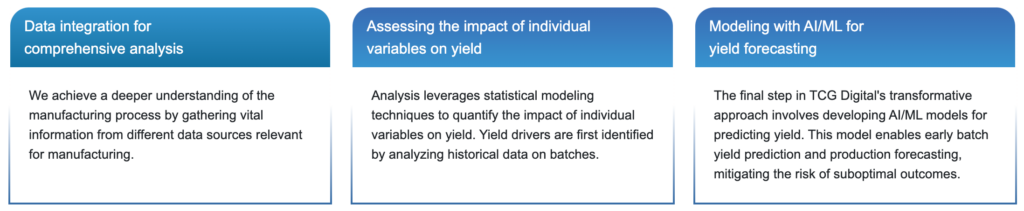
Our comprehensive solution comprises of
The greater the yield improvement, the greater the batch profitability
Harnessing the power of modern yield improvement solutions, tailored for process optimization and production forecasting, brings us closer to elevating batch profitability. These solutions provide a strategic advantage in navigating the complexities of today’s drug manufacturing industry by offering visibility into the key yield drivers. A comprehensive understanding of these drivers ensures effective yield management, culminating in heightened batch profitability.
Demystifying the critical determinants of the batch yield has never been easier. With our mcube™-powered batch yield solution, one can counter suboptimal yield realization and maximize output by understanding the key drivers.
To know more about how to better optimize the Batch Profitability, write to us at contact@tcgdigital.com
Whitepaper Overview
This whitepaper focuses on optimizing laboratory performance by leveraging advanced technologies like automation, data analytics, and AI. It highlights strategies for improving efficiency, accuracy, and decision-making in lab operations to enhance research outcomes and productivity.
This whitepaper discusses methods for sample analysis and validation in bioassays, emphasizing the importance of precision and accuracy in experimental procedures. It explores key validation parameters, including sensitivity, reproducibility, and robustness, to ensure reliable results in biological testing.
This whitepaper explores the “Lab of the Future” concept, focusing on how advanced technologies like AI, robotics, and data analytics can revolutionize laboratory environments. It highlights the benefits of automation, real-time data access, and predictive modeling in improving operational efficiency, research accuracy, and decision-making in labs.
This whitepaper explores the potential of sample clinical trials in accelerating drug development. It highlights how advanced analytics, data integration, and AI can improve trial design, patient recruitment, and decision-making in clinical research, ultimately enhancing the success rates of trials and speeding up time-to-market for new treatments.
Disclaimer: Welcome to TCG Digital. In order to provide a more relevant experience for you, we use cookies to enable certain website functionality. Cookies help us see which articles most interest you; allow you to easily share articles on social media; permit us to deliver content based on your interests and location; and provide many other site benefits. For more information, please review our Cookies Policy and Privacy Statement.