Life Sciences

Whitepaper Overview

This whitepaper explores how healthcare organizations can derive valuable insights from unstructured electronic health records (EHRs) using advanced analytics. It discusses the challenges of processing unstructured data and how AI and natural language processing can help transform it into actionable insights, improving patient outcomes, operational efficiency, and decision-making in the healthcare sector.

Introduction


In the world of clinical trials, data is at the heart of the quest for safer and more effective treatments. However, as trials grow in scale and complexity, the data they generate from various sources has surged to unprecedented levels. Traditional data management methods are no longer sufficient for efficiently handling this deluge. This is where robust data management systems step in, playing a pivotal role in modern clinical trial success.

Historically, clinical data management relied on fragmented, manual processes and isolated data silos. Yet, in today’s data-driven landscape, where trials generate vast and diverse datasets, this approach no longer holds. Modern trials demand a shift towards advanced data management solutions.

Centralized cloud-based data management systems

Enterprises are increasingly adopting centralized, cloud-based data management systems to meet these challenges. These systems serve as the central hub for data, offering a unified platform for seamless data integration. This integration fosters collaboration and facilitates real-time data access and analysis.

Enhancing efficiency through automation


Automation is another game-changing aspect of data management systems. By automating routine tasks like data entry and validation, these systems enhance efficiency, ensure data consistency, and expedite data management. In clinical trials, where data accuracy is paramount, automation is a game-changer.

Ensuring Data Quality and Compliance

Standardization and governance are crucial components of modern data management. Standardization ensures consistent data collection across sites and trials, simplifying comparisons and analysis. Governance, meanwhile, guarantees compliance with regulations and data security standards, safeguarding patient confidentiality and trial integrity.

Harnessing Real-Time Insights

One of the most transformative features of modern data management systems is their ability to provide real-time analytics. Researchers and sponsors can access and analyze data as it is generated, enabling swift, informed decisions. This empowers them to refine protocols, optimize patient recruitment, and accelerate therapy development.

In conclusion, data management systems are now indispensable in clinical trials. They not only streamline data processes but also unlock data’s full potential. As trials become increasingly data-centric, these systems are pivotal in advancing medical research, ensuring data accuracy, and contributing to innovative treatments. In an era where data holds paramount importance, data management systems stand as the cornerstone of clinical research.

Introduction

In the world of clinical trials, achieving real-time end-to-end visibility has become more than just a trend; it’s a critical necessity. Modern clinical trials are complex endeavors involving numerous stakeholders, generating massive amounts of data that reside in disparate systems. To navigate this complexity and make informed decisions, pharmaceutical companies are turning to advanced data analytics and customized visual dashboards.

The Demand for End-to-End Visibility

Clinical trials are no longer isolated studies but rather complex ecosystems involving pharmaceutical companies, research organizations, regulatory bodies, and healthcare professionals. Each trial generates vast datasets, from patient recruitment to safety monitoring, often residing in isolated databases. This fragmentation creates blind spots and hampers decision-making.

However, end-to-end visibility is more than data integration; it’s about having a comprehensive view of the entire clinical trial landscape. This approach empowers stakeholders at all levels to proactively identify risks, refine strategies, and make data-driven decisions in real time.

The Power of Advanced Data Analytics

At the core of achieving end-to-end visibility is advanced data analytics. These tools can process large datasets, analyze intricate relationships, and extract valuable insights. Sophisticated algorithms and statistical models can predict potential issues, improving resource allocation and patient safety.

For instance, predictive analytics can forecast patient recruitment rates, while machine learning algorithms can detect adverse events early. These capabilities are vital as clinical trials become more global and complex.

Customized Visual Dashboards: A Window into Insights

Customized visual dashboards are more than just data presentation tools; they are the windows through which sponsors gain real-time access to invaluable insights. These user-friendly interfaces provide dynamic displays of complex data, offering real-time updates and customizable views. What sets them apart is their ability to enable sponsors to break down data silos and synthesize massive volumes of disparate data points into one single source of truth that reveals actionable insights. This breakdown of data silos fosters collaboration, enhances transparency, and empowers stakeholders at all levels to make data-driven decisions with confidence.

Imagine a clinical trial manager tracking patient enrollment on a real-time dashboard, while a safety officer monitors adverse events on the same platform. Customization ensures stakeholders see precisely what they need to make informed decisions.

The Future of Clinical Trials: Data-Driven Visibility

The future of clinical trials revolves around data-powered, end-to-end visibility. The benefits are compelling: shorter timelines, enhanced patient safety, cost reduction, and better decision-making. Regulatory bodies are also beginning to support the use of advanced analytics and dashboards in clinical trials.

In conclusion, achieving end-to-end visibility in clinical trials is not just a possibility; it’s a necessity in today’s complex pharmaceutical landscape. By leveraging advanced data analytics and customized visual dashboards, sponsors can confidently navigate modern trial challenges. The organizations that embrace this data-driven paradigm will lead the way in medical innovation.

Introduction


Patient recruitment in clinical trials has long been a challenging and time-consuming process, causing delays and increasing costs. Clinical trials come with stringent eligibility criteria, and potential participants often have reservations about safety, the time commitment required, or a simple lack of awareness about available trials. However, the advent of artificial intelligence (AI) is poised to revolutionize patient recruitment, offering a more efficient, cost-effective, and patient-centric approach.

The Power of AI in Clinical Trial Recruitment

AI has the potential to analyze vast amounts of data from various sources, including electronic health records, claims data, and registries, to identify patients who meet the complex eligibility criteria for clinical trials. Additionally, AI can help match patients to trials that best align with their individual needs and preferences, offering a win-win scenario for both patients and trial sponsors.

Addressing Inefficient Patient Recruitment

AI’s ability to analyze both structured and unstructured patient data from diverse sources is a game-changer for clinical trial recruitment. This technology can identify eligible candidates who meet complex inclusion and exclusion criteria. For example, a study published in the Nature Digital Medicine journal in 2023 demonstrated that AI-powered patient recruitment can reduce costs by up to 70% and accelerate clinical trials by up to 40%. This efficiency in patient recruitment not only benefits the trial sponsors but also enables quicker access to potentially life-saving treatments for patients.

Customized Visual Dashboards: A Window into Insights

Customized visual dashboards are more than just data presentation tools; they are the windows through which sponsors gain real-time access to invaluable insights. These user-friendly interfaces provide dynamic displays of complex data, offering real-time updates and customizable views. What sets them apart is their ability to enable sponsors to break down data silos and synthesize massive volumes of disparate data points into one single source of truth that reveals actionable insights. This breakdown of data silos fosters collaboration, enhances transparency, and empowers stakeholders at all levels to make data-driven decisions with confidence.

Imagine a clinical trial manager tracking patient enrollment on a real-time dashboard, while a safety officer monitors adverse events on the same platform. Customization ensures stakeholders see precisely what they need to make informed decisions.

Overcoming the Diversity Challenge

One of the persistent challenges in clinical trial recruitment has been limited diversity, particularly in underrepresented minority populations. AI can help address this issue by optimizing recruitment through network analysis. By doing so, it ensures that trials, especially those focused on rare diseases, have diverse and representative participant pools. This, in turn, leads to more generalizable treatment outcomes and a broader understanding of the trial’s impact on different demographics.

Reducing High Dropout Rates

High patient dropout rates, which can be as high as 30%, have been a significant issue in clinical trials. These dropouts not only lead to unreliable results but also cost overruns for trial sponsors. AI can mitigate this problem by effectively matching patients to trials, reducing the burden of manual screening. Furthermore, AI’s continuous engagement with patients can help minimize dropouts and improve participant retention, resulting in more robust and reliable data.

Enhancing Data Utilization and Site Selection

In many cases, patient data remains underutilized, missing out on potential recruits for clinical trials. AI addresses this issue by increasing identification rates by up to 50% through enhanced data utilization. Moreover, it can analyze enrollment patterns to optimize site selection and recruitment strategies, ensuring the most efficient use of resources.

AI’s Transformation of Clinical Trials

Artificial intelligence is ushering in a new era for clinical trials by making them more accessible, faster, economical, and patient-focused. It smartly leverages data to match patients to trials efficiently, benefiting both patients and trial sponsors.

One notable solution leading this transformation is TCG Digital’s TrialXch, an AI-powered platform revolutionizing clinical trial recruitment. TrialXch utilizes AI to efficiently match patients to appropriate trials by analyzing complex health data. By optimizing the identification of eligible candidates, site selection, enhancing diversity, reducing dropout rates, and ensuring regulatory compliance, TrialXch is making clinical trial recruitment more accessible, swift, cost-effective, and patient-focused. Ultimately, it benefits all stakeholders involved in clinical trials, furthering the advancement of medical science and improving patient access to innovative treatments.

In conclusion, artificial intelligence is reshaping the landscape of clinical trial recruitment, addressing age-old challenges such as delays, high costs, limited diversity, and dropouts. This innovative technology promises to usher in a new era of patient-centric and efficient clinical trials, bringing us closer to breakthroughs in healthcare and treatments that can benefit us all.


Introduction

Clinical trials are at the forefront of medical advancement, playing a pivotal role in bringing new treatments and therapies to patients. However, despite their importance, patient recruitment remains a significant bottleneck in the clinical trial process. The challenges associated with identifying and enrolling eligible patients are complex and multifaceted, often resulting in delayed trials, increased costs, and a limited pool of diverse trial participants. To overcome these obstacles and accelerate tomorrow’s cures, the healthcare industry is turning to AI-powered patient recruitment solutions.

Challenges in Patient Recruitment

The numbers tell a compelling story of the difficulties clinical trials face in recruiting the right participants:

  • Missed Deadlines: Approximately 80% of clinical trials fail to meet their enrollment deadlines. Delays in patient recruitment can have a cascading effect, postponing the introduction of potentially life-saving treatments.
  • Terminated Trials: In a distressing statistic, 42% of clinical trials are prematurely terminated due to low enrollments. This not only wastes valuable resources but also squanders the research and development efforts invested in these trials.
  • Patient Dropouts: An alarming 30% of patients drop out of clinical trials before study completion. This attrition undermines the validity of the trial results and can be attributed to various factors, including stringent inclusion and exclusion criteria, distance to trial sites, and patient dissatisfaction.

AI-Powered Patient Recruitment: A Game Changer

AI-powered patient recruitment is a game-changer, leveraging artificial intelligence to expedite the recruitment process in clinical trials. Three key advantages stand out:

  • Enhanced Access: AI proactively identifies eligible patients for trials by analyzing vast datasets and patient records, broadening the pool of potential participants, and making trials more accessible to those who can benefit.
  • Reduced Timelines: AI improves the success rate of trial enrollments, swiftly identifying eligible patients and reducing recruitment time, ultimately lowering costs.
  • Empowered Physicians: AI equips physicians with a searchable repository of ongoing trials, enabling faster and more accurate patient recommendations, and enhancing their role in the recruitment process. This innovation accelerates treatment development, making healthcare more accessible and efficient.

How AI-Powered Patient Recruitment Works

AI-powered patient recruitment solutions follow a structured approach to streamline the process. They aggregate clinical data from multiple sources, including electronic health records, hospital databases, and clinical trial-related information. Here’s a simplified overview of how they operate:

  • Data Collection: Aggregate clinical data for patients from multiple sources and clinical trials-related information, creating a comprehensive patient and clinical trial database.
  • Natural Language Processing (NLP): An NLP Engine extracts key information on inclusion and exclusion criteria from clinical trial protocols and extracts patient-related data from hospital or healthcare data sources.
  • Fuzzy Matching: AI-based fuzzy matching engine matches patients to clinical trials based on inclusion and exclusion criteria and patient-related information, enhancing precision and speed.
  • Recommendations: The system suggests clinical trial sites with target patient pools based on matching scores, streamlining recruitment.
  • Assessment: The AI assesses clinical trial designs to estimate their potential for finding matching patients. This innovation accelerates treatment development and elevates the well-being of patient

Keeping in mind how AI-powered patient recruitment solutions have the potential to revolutionize the clinical trial landscape, TCG Digital’s TrialXch emerges as a comprehensive solution designed to address the challenges of patient recruitment in clinical trials. By harnessing the capabilities of the AI-powered analytics platform, mcube, TrialXch empowers you with advanced algorithms and personalized recommendations that expedite patient recruitment. This enhanced efficiency and accessibility in patient recruitment play a pivotal role in accelerating the development of new treatments and improving the well-being of patients worldwide. With this cutting-edge tool at your disposal, you can confidently expect faster trial completions and the swift delivery of tomorrow’s groundbreaking cures.

Introduction

From Bench to Breakthrough:

Revolutionizing Drug Research with AI-Powered Integrated Assay Analysis 

In the dynamic landscape of life sciences research, the acceleration of discoveries and breakthroughs is of paramount importance. Today, integrated assay analysis, powered by cutting-edge AI solutions, represents a pivotal leap in scientific exploration, revolutionizing the pace, depth, and efficacy of research endeavors across diverse disciplines.

The challenge: Non-integrated lab management systems and manual bioassay analysis hamper drug discovery

Drug discovery and biopharmaceutical manufacturing rely on bioassays extensively. However, the lack of integration between assay analysis and lab management software is a major hindrance to research. Labs using non-integrated systems rely on manual work for assay-related analysis, which not only requires significant effort but also elevates the risk of human errors. Scientists, hence, require fully integrated software solutions that can improve assay analysis substantially through seamless integration with lab management software systems like laboratory information management systems (LIMS), scientific data management systems (SDMS), Sample Management Software, Electronic Lab Notebooks (ELN), etc.

The fix: Integrated assay analysis solutions powered by AI platform, mcube

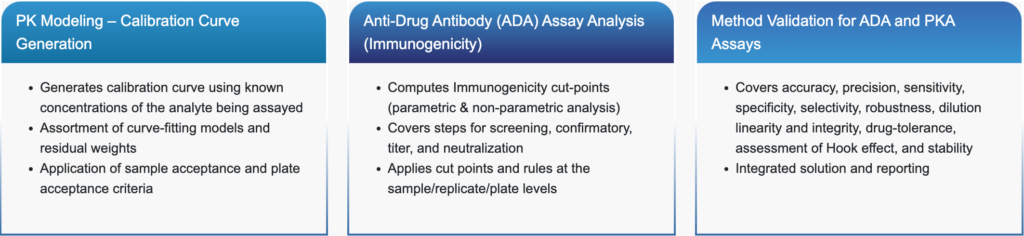
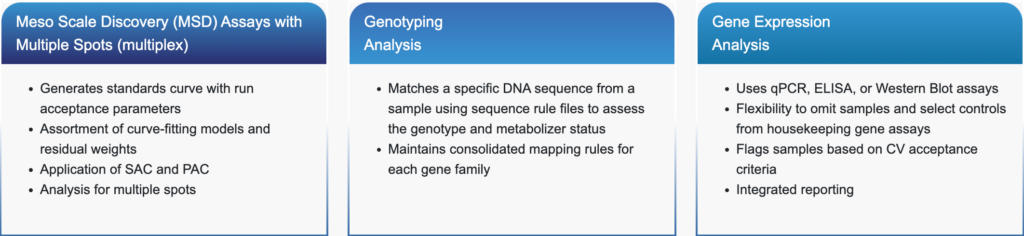
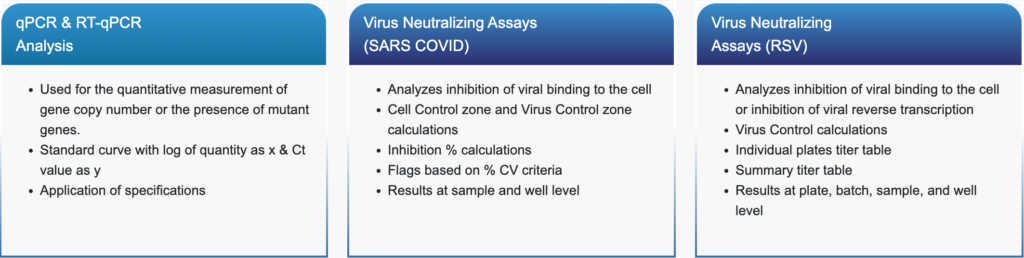
At TCG Digital, we offer a wide range of solutions enabling seamless integration with lab management software systems. With these solutions at your disposal, you can boost productivity and efficiency, whilst reducing the risk of errors. Our assay analysis solutions effectively cater to the different stages of drug development right from In vitro biology assays, In vitro ADME assays, pharmacokinetic (PK) studies, and In vivo pharmacology.

The integrated assay analysis solutions are built on the robust foundation of mcube, an end-to-end AI platform that powers data analytics with comprehensive statistical and mathematical models, offering a transformative approach to assay analysis. Some of the solutions we offer include but are not limited to –

Key features of our assay analysis solutions include:

  • Seamless integration with laboratory data sources
  • Ability to read data directly from data sources and write back the analysis outcome into them for the analyst to take further action
  • Access to multiple curve fitting models, both linear and non-linear
  • Generation of run acceptance parameters and relevant reports
  • Support for defined user interactions for scenario creations
  • Method validation support

Creating future-ready labs: Fast-tracking research, bolstering drug discovery

Integrate seamlessly with diverse laboratory software like LIMS, SDMS, Sample Management Software, ELN, etc. with our integrated assay analysis solutions.

TCG Digital’s comprehensive assay analysis solutions library is tailored for future labs. You can benefit from their ability to simplify data management, improve overall operational efficiency, and minimize errors. Integrated assay analysis solutions also enable different user interactions, data modeling, and report generation across labs. Accelerate research and enhance data accuracy in bioassay analysis with our cutting-edge AI-powered solutions.

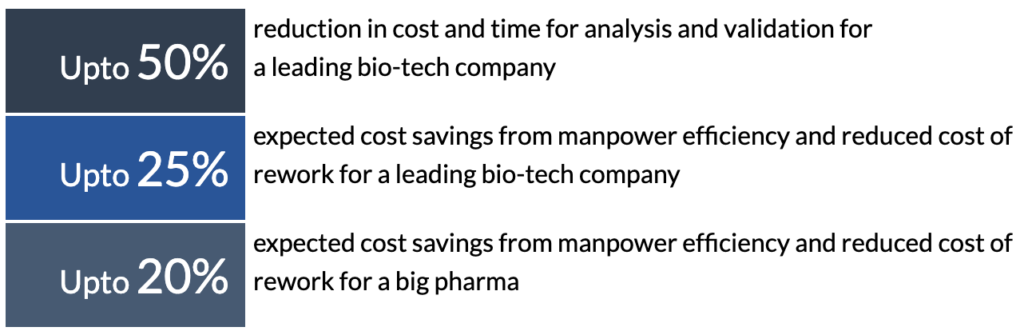
Significant benefits reaped by organizations using our integrated approach:

In conclusion, integrated assay analysis has emerged as critical for accelerating research, particularly in the area of drug discoveries. Leveraging mcube’s AI-powered integrated assay analysis solutions stands as a beacon of progress in life sciences research. For all the scientists in the pursuit of expediting discoveries, unlocking novel insights, and propelling scientific advancements, the synergy between integrated assay analysis and TCG Digital’s comprehensive solutions library holds immense promise. Embark on a journey of transformation and innovation with our fast, accurate, and regulatory-compliant assay analysis solutions for unparalleled drug discovery.

To know more about integrated assay analysis, write to us at contact@tcgdigital.com.


Introduction

Clinical trial sites deal with a myriad of tasks right from patient recruitment to capturing patient data and performing tests/procedures. In addition to facilitating patient interface, these sites also serve as the direct point of care for medical concerns. Sites have a direct impact on the enrollment rate, patient screening, patient retention, data quality, and compliance with regulations, and study protocol.

If a clinical trial fails to reach its enrollment target, the trial timeline would increase, resulting in extensive monetary losses, potentially budding the need for new sites. It is therefore paramount for clinical trial success to select a high-performing site with adequate outreach capacities, a physician network, and a promising local population demographic. A high-quality trial site consolidates the sponsor’s ROI along with the effective timeline of a novel drug’s patent.

Site selection in hindsight: Revolutionizing clinical trial optimization with AI

The conventional method used to select clinical trial sites relied on their experience in facilitating studies. However, this method deduced high historical participation as an indication of high enrollment potential, which isn’t always right. Such and similar loopholes in site optimization are being countered by modern technologies such as AI.

AI is now seen as the ultimate decision-making tool, enabling predictive models to anticipate future enrollment rates based on historical data. This includes enrollment duration, site activation time, and time to first patient in. Such predictive models help you identify and select the most resourceful, and relevant sites for your research. Real-time monitoring and forecasting of site performance further aid in the early detection of performance issues, supporting proactive decision-making.

The power of AI: Consolidating site performance and clinical trial success

AI is set to transform clinical trials with real-time insights for site optimization. Here is how AI helps –

  • Continuous capturing and assessment of enrollment data provide up-to-date information on enrollment progress and completion timelines.
  • Real-time monitoring enables simulated enrollment scenarios to accurately forecast enrollment rates and mitigate site performance discrepancies, regulatory challenges, and slow recruitment.
  • Automated data analysis, timely insights, and predictive analytics facilitate real-time site performance monitoring.
  • Advanced AI algorithms and models can effectively identify deviations from expected site performance trajectory and prompt resolution strategies.
  • Enrollment rate, enrollment target achievement, dropout rate, participant diversity, and other key performance metrics can be accurately tracked with AI.
  • AI-enabled real-time dashboards and reports offer a comprehensive overview to the relevant stakeholders of site performance.

TCG Digital’s site optimization solution powered by AI platform mcube

TCG Digital’s site selection tool is powered by the AI engine of mcube. It is designed to facilitate seamless site selection and enable clinical trial optimization.

Our approach focuses on –

  • Using a multi-objective optimization function for optimal site selection, keeping different criteria such as cost, quality, historical performance, and existence of KOLs.
  • Ensuring access to the subject population adhering to the eligibility criteria.
  • Identifying resource availability, technical facilities, and staff quality at sites.

The algorithm also uses business rules for faster and more efficient execution. This approach helps biopharmaceutical companies and researchers select the most suitable site for their clinical trials. Moreover, by providing the option of better sites, the site selection solution improves trial timelines and minimizes site-related costs.

Empowering future clinical trials with AI-enabled site optimization

More and more emphasis is being laid on choosing the most relevant, resourceful, and equipped clinical trial sites, in order to ensure the success of medical research. As a backbone, these sites play a multifunctional role and are detrimental to enhancing data quality and enrollment rates and ensuring compliance. Overcoming the limitations of traditional site selection techniques, TCG Digital’s AI-powered approach stands to revolutionize the process of site selection. With real-time insights into site performance, proactive decision-making is made easier, allowing for early issue resolution. AI algorithms, capable of continuously monitoring enrollment data offer substantial scope in performance optimization and maximizing return for sponsors.


Introduction

Flow cytometry is a formidable asset for a researcher. By compartmentalizing cells based on set molecular characteristics, flow cytometry provides information on specific cell types from highly complex and populated samples. This technique analyzes thousands of cells per second, allowing researchers to collect huge data volumes in a relatively short time.

Flow cytometry plays a crucial role in various fields such as cancer management aiding in early detection, determining treatment effectiveness, and enabling personalized therapy decisions. It also helps in screening new therapies faster, and cheaper. Flow cytometry is also widely used in various other applications like protein engineering, genomics, and vaccine development.

However, traditional flow cytometry workflows are often hindered by manual gating – a labor-intensive process where analysts visually assess scatter plots and histograms to draw regions around cell populations of interest – being prone to subjectivity and bias.

With the exponential growth of data and the complexity of cell populations, manual gating becomes increasingly impractical and difficult. Automated gating algorithms, powered by AI and ML, offer a solution to this challenge. By leveraging unsupervised and supervised approaches, these algorithms can efficiently identify cell populations of interest, reducing analysis time and minimizing bias.

TCG Digital’s innovative approach to flow cytometry combines AI/ML algorithms with advanced analytics, enabling the interpretation of high-dimensional data with unprecedented accuracy. By automating gating strategies and leveraging unsupervised and supervised techniques, TCG Digital’s platform streamlines workflow, enhances consistency, and accelerates biomarker discovery.

In addition to automated gating, AI and ML play a crucial role in data analysis and visualization. Advanced algorithms enable dimensionality reduction, cluster analysis, and cell identity interpretation, empowering researchers to extract meaningful insights from complex datasets. With advanced clustering algorithms such as Uniform Manifold Approximation (UMAP) and t-distributed Stochastic Neighbor Embedding (t-SNE), researchers can navigate high-dimensional data with ease, facilitating the discovery of novel cell types and biomarkers.

Other algorithms, such as self-organizing map (SOM) and PhenoGraph, can improve cluster discovery. Moreover, AI/ML tools can enhance cell identity interpretation through automated gating strategies, deployment of supervised algorithms, and identification of immunophenotypes and biomarkers. Furthermore, frequency tables, histograms, UMAP plots colored by cluster or relative marker expressions, contour plots, and tSNE plots (for cell subset visualizations) are showcasing immense opportunities for AI-powered flow cytometry data analysis.

Integrating AI/ML, leveraging novel algorithms, and harnessing the power of automation is proving to be groundbreaking for the life sciences industry. Advanced flow cytometry will be the cornerstone of this transformation, replacing manual gating with highly sophisticated, automated gating algorithms. Using innovative software solutions for flow cytometry, data analysis will not only bridge existing gaps and overcome subjectivity bias but will also efficiently deal with complex datasets and large cell populations to derive actionable insights. Auto-gating for cell sorting, automated cell population identification, cell development modeling, and dimensionality reduction are the highlights of computational flow cytometry. It will have a substantial impact on vaccine development, proteomics, protein engineering, drug development, and many more scientific areas.

Introduction

In a fast-paced world of research, laboratories face increasing pressure to innovate rapidly. Amidst this, data emerges as the ultimate tool, with big pharma companies leading the charge in utilizing AI-driven analytics for lab efficiency improvement.

Some of the challenges faced in ensuring optimal laboratory performance today include:

  • A myriad of data silos resulting in myopic decision making
  • Manual reporting processes that cause unnecessary overhead
  • Delayed reporting, which leads to missed opportunities

Laboratories are now moving towards replacing traditional performance analytics solutions with AI-enabled integrated solutions to facilitate both proactive and reactive decision-making, marking a paradigm shift in how laboratories operate.

Performance analytics labs: A centralized data-driven approach

Laboratories are realizing the significance of centralized data management with data lakes and warehouses as they help consolidate data acquired from lab software and instruments. A centralized, data-driven performance analytics approach leads to enhanced productivity, efficiency, and utilization, with a focus on reducing operational costs and procedural errors. Key Performance Indicators such as turn-around time, asset utilization, equipment downtime, consumable usage, and overall equipment effectiveness play a pivotal role in measuring lab performance.

As the number and complexity of KPIs grow, manually optimizing them and maximizing operational performance becomes challenging. AI-enabled analysis techniques are now being adopted to mitigate this challenge and ensure continuous improvement in lab KPIs, moving towards optimized lab performance.

The role of AI-enabled optimization techniques and ML in laboratories

Some areas where the implementation of AI-driven analysis techniques is already causing disruptions:

  1. Demand forecasting – Predictive analysis of historical data helps estimate and predict the demand for raw materials and consumables required in the lab, reducing procurement cycles and associated costs.
  2. Inventory management and optimization – Efficient demand forecasting results in efficient inventory management. Leveraging ML algorithms helps track consumable wastage and accurately identifies the factors causing it. This allows labs to take corrective actions, reduce inventory management costs, and ensure lab inventory optimization.
  3. Predictive maintenance for labs – AI can help identify anomalies in the expected performance and the potential downtime or chances of failure for lab instruments. This allows labs to plan for pre-emptive instrument maintenance and avoid operational outages caused by unplanned instrument downtime.

TCG Digital’s lab performance monitoring solution: Enhancing operational efficiency

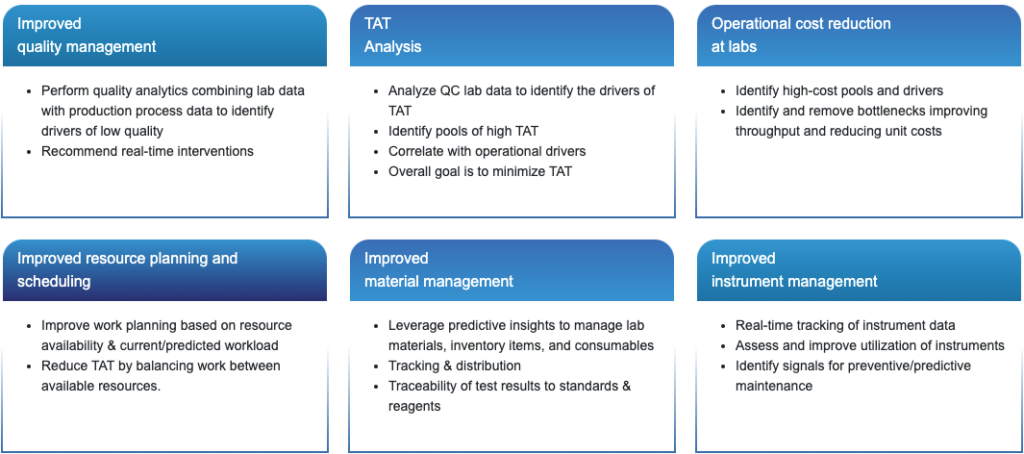
TCG Digital’s laboratory performance monitoring solution provides a consolidated view of interconnected lab data by merging LIMS data with other sources like scientific data management systems (SDMS) or electronic lab notebooks (ELN). The performance dashboards provide insights into critical sample metrics like cost assessment, TAT, and on-time completion, enabling data-driven decision-making.

An assortment of solutions for lab analytics include:

The solution comprises of a rich library of laboratory KPIs that facilitate the following:

  • Analysis of on-time completion and turnaround time for all requests
  • Analysis of pending requests overdue and average delay statistics
  • Analysis of completed tests to track on-time deliveries by client/sample or other dimensions
  • Analysis of pending tests overdue and average delay statistics and trends
  • Analysis of billed/un-billed turnover costs – trends, distribution and drill-down
  • Cost analysis over invoicing item parameters – trends and drill-down
  • Analysis of timesheet data, time tracking, and charge-outs by employees
  • On-off specification count analysis
  • Defect analysis with root cause analysis

Reimagine your lab’s performance monitoring: Improve KPIs, and optimize performance

Performance optimization in research labs is crucial for optimal resource utilization, and cost reduction.

TCG Digital’s innovative solutions are empowering laboratories to navigate the complexities of modern research seamlessly, providing better insights into process performance and facilitating performance optimization. Embrace the future of lab excellence with TCG Digital’s AI-powered lab performance analytics solutions that not only offer a 360-degree view of lab operations but also provide transparency and better decision-making capabilities.

Want to know more about how to step up your lab performance? Write to us at contact@tcgdigital.com