The German House of Soccer sits quietly in the city, owned and run by the DFB. The building itself came as quite a shock, especially given that even ardent soccer fans had no idea such an environment existed. On the day Germany met Paraguay in the Round of 32, it filled with a crowd that had almost nothing in common. Hosted by TCG, the watch party brought together clients from all over, people who spend their working lives in petrochemicals, in hospitals, and in aviation; thirty to fifty of them moved between the food and the screens. A handful were German, and you could pick them out by the way they watched. The rest were Americans, most of whom had discovered the sport somewhere in the last three weeks. In a glass case in the left corner of the room, away from the spectacle, sat Germany’s 1990 World Cup trophy, the third of their four stars, a piece of football history. Indeed, the 1990 trophy was their first ever after the fall of the Berlin Wall, a trophy won by a united Germany.
“This is my first time actually watching soccer,” one of them told me with pride, an example of the numerous new eyeballs the World Cup’s arrival to the States had drawn to the game. He watched the whole thing standing up, often leaning toward his colleague and asking him about the sequence of events that had just occurred, trying to understand each team’s tactics. Another put the month into a sentence better than I could have. “The World Cup has brought a lot of sports fans together because it’s given us a global stage where we root for America in a team sport.” Throughout the night, the crowd remained invested in the game, watching as Germany struggled against a Paraguay squad that the US had thrashed 4-1. Germany’s struggles vindicated the US’s performance, and each attempt by Germany was compared to the US’s performance.
If one of the World Cup’s goals is to introduce new fans to the game, that game gave them the best possible reason. Heading into extra time after a hard-fought 90 minutes, Jonathan Tah’s header gave Germany a much-needed breakthrough, pulling them ahead 2-1. Unfortunately for him and the German delegation in the room, Tah had drifted offside before heading the ball, and the goal was disallowed. After 120 minutes of exemplary defensive gameplay, Paraguay had forced the game to a penalty shootout, turning what should have been a lopsided result into essentially a coin flip.
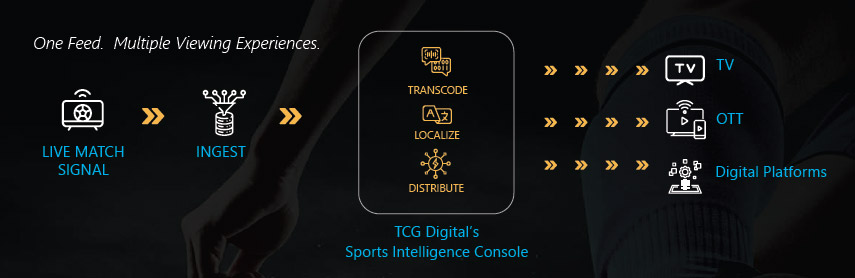
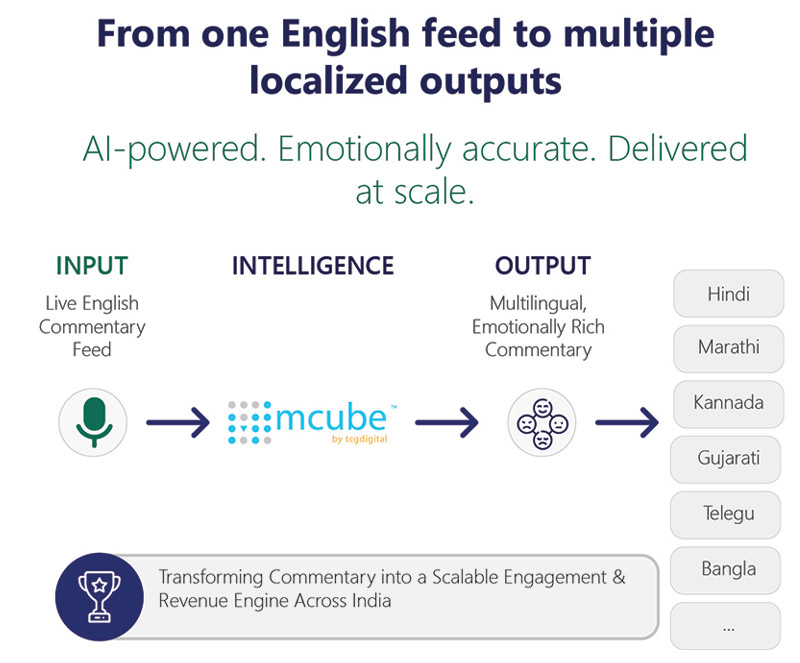
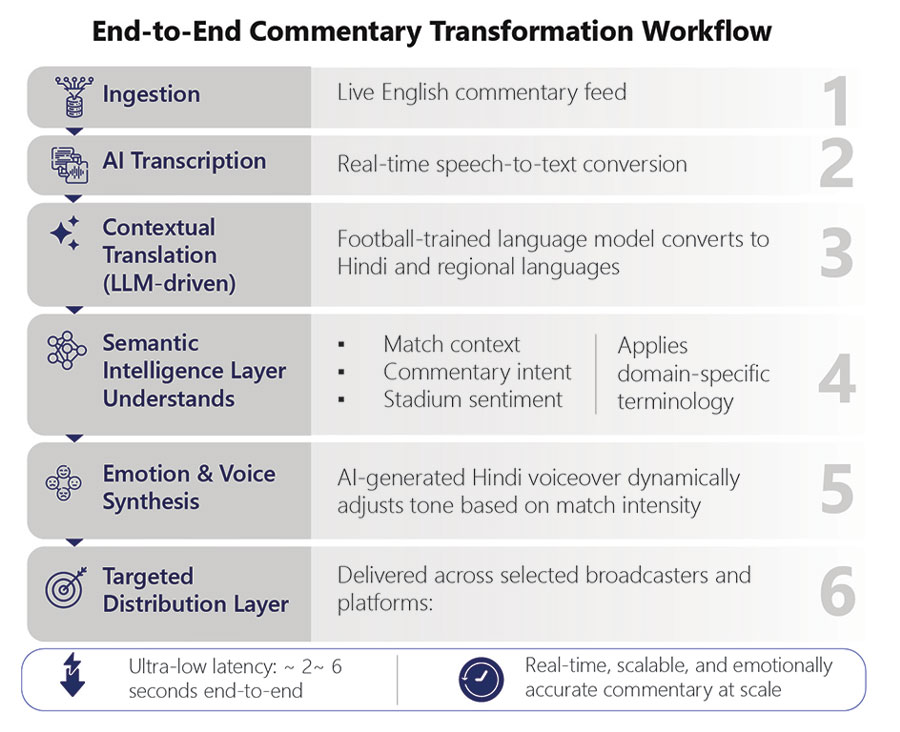
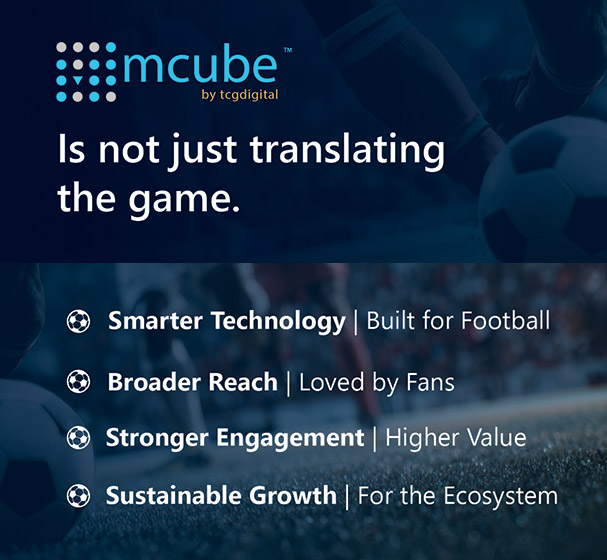
The technological advancements that have taken the rest of the world by storm have not left sports untouched. While “gut feel”, “eye-test”, and “clutch” are still important, every aspect of the game can be converted into numbers. Everything that decides a penalty can be measured. TCG Digital’s Sports Intelligence runs on a platform built to measure exactly these events. Its engine, mcube™, ingests performance data, biomarker trends, and video and turns it into forecasts.
Extend that to a shootout, and the picture gets richer still. A keeper’s dive tendencies are data. Optimal placement is data. The taker’s fatigue, his recovery state, his heart rate on the walk to the spot? All data. The Sports Intelligence platform’s neuro-biometric layer is built to read decision speed and emotional regulation, with the capability to understand the mental resilience that separates the taker who buries it from the one who skies it. In theory, you can model a perfect penalty. You can hand a player the unstoppable kick, drawn up to the centimeter.
And then he still has to take it. As my mother often says, “You can lead a horse to water, but you can’t make it drink.” Every input into a penalty is, in principle, knowable and modifiable. Yet, despite all the numbers, all the preparation, and all the data in the world, none of it matters once the ball sits on the spot and one man has to put it into the back of the net, a nation’s collective hopes and dreams riding on his shoulders. If everything could be modeled, predicted, and proved, why play the game? Why dedicate your whole life if one simple algorithm is the ultimate decision-maker? The platform can narrow the choice to its finest margins. A human still has to make that decision.
Eleven meters, one ball, one goalkeeper, five takers a side, and then, when five each was not enough to separate them, sudden death. One kick. Make it, and you breathe. Miss it, and you carry it home. Paraguay held their nerve. Germany did not.
The room split instantaneously. The disgruntled sighs of the German fans reverberated across the room. The Americans, on the other hand, were shocked. Not because they wanted Germany to lose, but because they had just watched a massive underdog eliminate a four-time champion, and they understood, maybe for the first time, why the world stops to watch this tournament. Hundreds of dejected German supporters emerged from a nearby pub, flags and scarves gripped tightly, walking back into Midtown carrying the full weight of what German football has become. Germany had won four World Cups, finished runner-up four times, and reached four semifinals between 1954 and 2014. Since then? Group-stage exits in 2018 and 2022, followed by a Round of 32 loss against 41st-ranked Paraguay. The delegation that walked out of the German House of Soccer knew exactly where the program stands, and it was not where the trophy in that glass case said it should be.